
Bad news can feel impossible to escape. Political fights fill social feeds, prices keep climbing, and frightening headlines arrive before breakfast. For pregnant women and new mothers, that constant stream of uncertainty can add another layer of stress to an already demanding stage of life.
New research suggests the story is more complicated than simply blaming negative news. A 2026 study led by University of Notre Dame researchers found that how pregnant women interpret and cope with stressful social conditions may shape their experience of stress. The findings suggest that the response to troubling information deserves as much attention as the information itself.
Published in Social Science & Medicine, the study examined sociopolitical stress among pregnant Filipina women in the Philippines. Researchers wanted to understand how political instability, financial strain, health concerns, and other outside pressures entered women's daily lives during pregnancy.
The team interviewed 21 pregnant women from several regions of the Philippines during 2021. That period brought strict COVID restrictions alongside existing financial, political, and social pressures. Instead of treating every woman as a passive recipient of stress, the researchers asked how each participant made sense of difficult circumstances.
Stress Came From More Than Scary Headlines
Leah / Pexels / According to the researchers, 67% of participants described financial stress. Another 52% discussed cultural pressures that affected their mental and physical well-being, while 38% raised concerns about access to quality medical care.
Those pressures often overlapped. A woman could worry about household finances while also thinking about healthcare, political events, family needs, and her pregnancy. Stress did not arrive as one neat problem that could be solved and forgotten.
News and social media added another source of pressure. About 62% of the women identified Facebook or another social media platform as their main source of information. That meant political arguments, troubling news, and personal updates from friends could all appear in the same digital space.
Yet the researchers did not find a simple story in which exposure to bad news automatically produced the same response in every participant. Women interpreted what they saw through their own families, communities, beliefs, and experiences. Those differences helped shape how they managed uncertainty.
How Pregnant Women Found Ways to Cope?
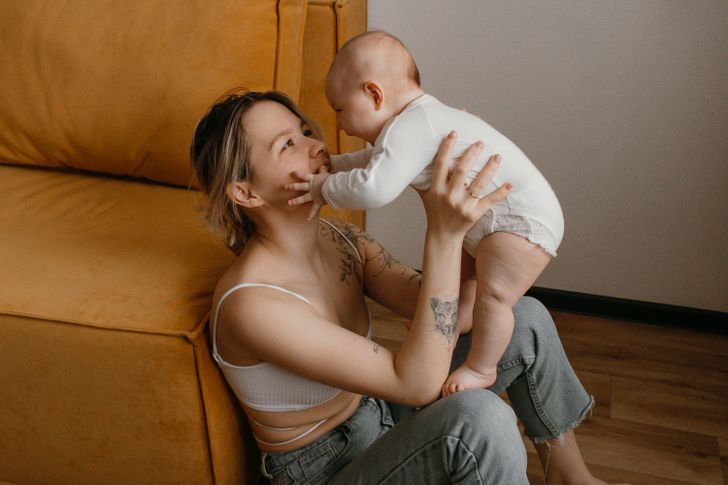
Olya / Pexels / One key strategy identified by the researchers involved looking at other people's circumstances. The study described this as ‘community viewing.’
Some women compared their own difficulties with hardships experienced by relatives, neighbors, or other people around them.
Seeing others struggle with severe poverty, food shortages, or death sometimes changed how participants viewed their own problems. The comparison did not erase hardship. It gave some women a different frame for understanding what they were facing at that moment.
Positive thinking also appeared in the interviews. Some participants tried to focus on what was going well instead of giving all their attention to frightening events. Family relationships and gratitude for present circumstances became important sources of emotional support.
Some women described laughing off stressful experiences or finding lighter moments during difficult periods. Humor did not solve political instability or financial trouble, but it could create emotional distance from a situation that otherwise felt overwhelming.
Lead author Kristine Joy Chua stressed the importance of understanding the tools women actually use rather than judging those strategies from the outside. Cultural context matters here. A coping method that seems passive through one lens may carry a different meaning within a particular family or community.
Other Research Points in a Similar Direction
The Notre Dame findings fit with earlier research on stress during pregnancy. The Australian Birth in the Time of COVID study followed 419 pregnant women and examined how pandemic hardship and distress related to anxiety two months after birth.
Researchers found that both objective hardship and subjective distress during pregnancy predicted postpartum anxiety. However, resilience, tolerance of uncertainty, and the way women appraised the pandemic changed the relationship between hardship and later anxiety.