

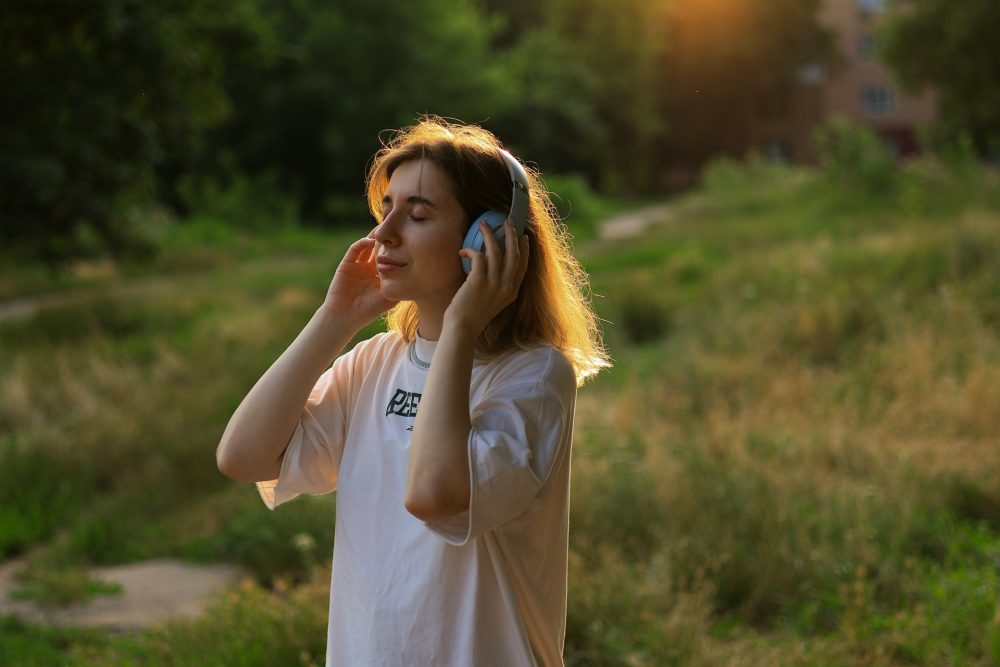
Putting on headphones before a walk feels almost automatic. You grab your phone, pick a playlist or podcast, and head outside without giving the habit much thought. Recent research gives you a good reason to reconsider that routine. The sounds around you may play an important role in reducing stress, restoring attention, and helping your body relax.
There is also a simpler issue to consider. Headphones can make it harder to notice traffic, people, animals, warnings, and other changes happening nearby. An audio-free walk does not require special equipment or extra time. You simply leave your ears open and allow the environment to become part of the experience.
Natural Sounds Give Your Brain Something Valuable

Liliana / Pexels / Birdsong does more than make a park sound pleasant. Research suggests that natural sounds can actively contribute to the calming effect people experience outdoors.
A 2026 study from North Carolina State University examined how different settings and sounds affected stress and mental restoration. Participants exposed to a restored forest setting with birdsong reported lower stress, stronger positive emotions, and greater feelings of restoration than people exposed to urban conditions or traffic sounds.
Researchers at the University of Tübingen found another interesting connection. Participants completed a thirty-minute walk, while researchers tracked measures including cortisol, blood pressure, and heart rate.
Cortisol dropped by almost 33% on average across participants. People who were specifically encouraged to notice birdsong also reported greater improvements in mental well-being.
Your Brain Gets a Better Chance to Recover
Daily life asks the brain to concentrate almost constantly. Emails, messages, meetings, traffic, videos, and notifications keep pulling attention in different directions.
A walk can provide relief from that mental workload. Adding another stream of information through headphones may keep the brain occupied when it finally has a chance to loosen its focus.
A large 2026 analysis covering data from more than ten million people linked intentional exposure to nature with lower anxiety, fewer depressive symptoms, reduced negative emotions, and decreases in heart rate. Researchers have connected some of these effects to a process known as soft fascination.
Headphones Can Make a Walk Less Safe

Cale / Pexels / Headphones create a private audio bubble, but streets and trails keep moving around you. This leads to safety risks.
Hearing those signals gives your brain extra time to react. Loud music or noise-canceling headphones can reduce that advantage, especially when your eyes are focused straight ahead.
The concern becomes more serious on hiking trails. "Backpacker" has highlighted how earbuds can interfere with situational awareness, an important outdoor skill when conditions can change quickly.
A hiker might need to hear approaching wildlife, another person's warning, or an emergency announcement. A rattlesnake does not send a phone notification before becoming a problem.
You Might Miss an Emergency Warning
Outdoor emergencies are not always obvious from what you can see. Rangers and first responders may use loudspeakers, sirens, or verbal instructions to warn people about wildfires, severe weather, closed areas, and other hazards.
Headphones can make those messages harder to hear. Noise-canceling models are particularly good at blocking outside sound, which becomes a drawback when that sound carries urgent information.
There is another side to the safety issue. Someone else might need you to hear them. Park rangers have pointed out that hikers can sometimes play an important role in emergencies. A nearby walker who hears someone calling for help can contact emergency services when rangers are not immediately present.
Quiet Walks Can Give an Overloaded Mind Some Space
A spare thirty minutes can feel like another opportunity to consume something. Many people automatically fill a walk with a podcast, audiobook, playlist, phone call, or another form of entertainment.
That habit can leave surprisingly little room for uninterrupted thought. Silent walking has gained attention as a simple alternative, with people deliberately walking without digital entertainment and paying attention to their surroundings instead.
The idea has roots in established research on attention and quiet wakefulness. The brain does not simply switch off when external stimulation disappears.